
When using Thailand’s VPS NAT architecture, load balancing and high-availability design directly impact business continuity and user experience. Given that NAT hides the real IP address and restricts public network ports, specific adjustments must be made in terms of networking, session persistence, and failover. This article provides actionable technical advice to help engineering teams in Thai VPS Achieve stable and resilient services in the environment.
Understanding the limitations of Thailand’s VPS NAT architecture
Common limitations in NAT environments include issues such as public IP sharing, port mapping, source address translation, and connection tracking table overflow. When designing, consider the number of concurrent connections, the short-connection style, and port reuse to avoid exposing a large number of short-lived TCP connections. At the same time, identify the impact of hairpin/NAT loops on internal network communication.
Load balancing solution selection and deployment recommendations
In NAT scenarios, reverse proxies or application-layer load balancing (L7) are preferred for traffic distribution, combined with health checks and SSL termination to reduce backend load. If L4 load balancing can be used, it can be combined with source address preservation or DSR schemes, but it is necessary to evaluate the forwarding capacity and connection tracking overhead of the VPS provider.
Key Points of High-Availability Design and Failover Strategies
Under NAT, it is often not possible to use a floating public IP. It is recommended to use DNS failover with a low TTL, external health probes, or route switching triggered by third-party monitoring. Internal backend redundancy can be achieved through active-active deployment, heartbeat VPN, or cross-availability zone replication, ensuring that databases and stateful services have the capability to recover in different locations.
Handling Session Persistence and Source IP Issues
Since NAT changes the source IP, it is advisable to use a stateless design or migrate sessions to centralized storage (Redis, databases). If session persistence is necessary, use cookie-based session persistence and pass X-Forwarded-For at the proxy layer to retain the client’s actual IP for logging and security purposes.
Operations, monitoring, and testing methods
Establish comprehensive monitoring of health checks, connection counts, and error rates, and configure alerts and automated failover scripts. Regularly conduct chaos testing to verify the latency and data consistency of DNS switching, backup restoration, and cross-datacenter routing switching, thereby reducing recovery time in the event of actual failures.
Suggestions for security and performance optimization
Enhance firewall rules, rate limiting, and SYN protection at the NAT boundary, and optimize kernel conntrack and ephemeral port parameters to support high concurrency. Reduce origin server load by combining CDN and WAF ; Centralize the management of logs, auditing, and DDoS detection to improve observability and emergency response speed.
Summary Recommendations: Under Thailand’s VPS NAT architecture, application-layer load balancing and stateless design are prioritized. Centralized session storage, along with low TTL DNS or external monitoring-based failover mechanisms, is used to replace floating IPs. Monitoring and testing are enhanced, while optimizations are made at the kernel and network levels regarding the number of connections and security. By implementing this strategy in phases as described above, a stable and maintainable highly available system can be achieved despite NAT constraints.
- Latest articles
- A Practical Guide Teaches You Common Testing Methods To Verify Whether Hong Kong Server Clusters Are Exclusive
- Contract Considerations: Caution Is Needed When Choosing Ranked Vendors For US Server Rentals
- Best Practices For SMEs Using Cambodia CN2 Return-to-China Servers To Reduce Latency Costs
- Common Troubleshooting Steps And Rapid Recovery Solutions For Taiwan Telecom CN2 Broadband
- An Automated Operations And Maintenance Solution Covering Everything From Development To Monitoring How To Build A Site On Hong Kong Cloud Servers
- From A Business Perspective, Is Vietnam's VPS Reliable? Considerations Regarding Compliance And Data Security
- Free Server Korea Security Protection Policy And Backup Implementation Guide
- Cost And Operation Management Recommendations For Enterprises Deploying Korean CN2 Site Cluster Cloud Servers
- Basic Information On Taiwan Proxy Servers, Common Terminology Explanations, And Purchase Precautions
- How To Choose A Cloud Server In Thailand: From Network Latency To After-sales Service, Comprehensive Aspects
- Popular tags
-
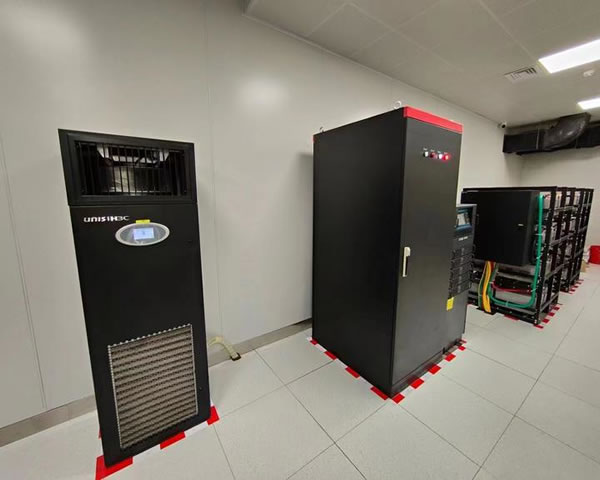
Deployment Recommendations And Performance Tuning Tips For Thai VPS In Cross-Border Acceleration And Access Control Scenarios
Targeting cross-border acceleration and access control use cases, this article provides recommendations for deploying VPS in Thailand along with performance optimization tips. It covers network architecture, line selection, security policies, and system-level optimizations to enhance stability and access speed in Southeast Asia. -

Usage Security Analysis Of Alibaba Cloud Thailand Cloud Server
this article analyzes the security of using alibaba cloud thailand cloud servers, including security measures, data protection and network security. -
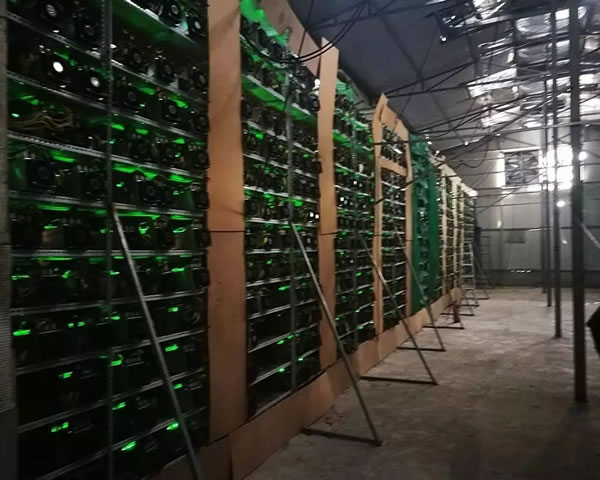
Evaluating Long-term Operational Costs Helps Avoid Focusing Solely On Short-term Discounts When Purchasing Thai Cloud Servers At Low Prices
When purchasing Thai cloud servers at low prices, avoid focusing only on short-term discounts. This article analyzes the components of long-term operational costs, common pitfalls, network and storage expenses, SLAs and support services, security and compliance considerations, as well as methods for TCO assessment, and provides decision-making recommendations.